
"outer skin"
500 article(s) found

The practice of coffee beans _ how to cook coffee beans is delicious
Coffee beans when to eat the best coffee fruit is formed by the outer skin, pulp, endocarp, silver skin, and the seeds wrapped in the innermost layers (coffee beans), the seeds are located in the center of the fruit, and the parts outside the seeds are of little use. Generally speaking, there are two pairs of seeds in the fruit, but occasionally there is only one seed in the fruit, which is called fruit bean. And for

Introduction to the characteristics of Rwanda Coffee Flavor and Flavor Manor
The biggest harvest season for Rwandan coffee is during the main rainy season, from March to the end of May. During the harvest season, farmers spend most of their day picking coffee fruits by hand. In the afternoon, farmers carry coffee fruits in traditional baskets made of banana leaves to a cleaning station a few hours away. The mechanic uses his hands to make the best quality coffee with crimson color.

Understanding Coffee trees and their planting conditions
1. What is the origin of coffee trees in Ethiopia in Africa. Coffee tree is a perennial evergreen shrub or small tree of Rubiaceae. It is a horticultural perennial cash crop with the characteristics of fast growth, high yield, high value and wide market. Wild coffee trees can grow up to 5 to 10 meters high, but the coffee trees planted on the manor are more in order to increase the amount of fruit and facilitate harvesting.
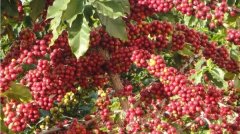
The generating environment of coffee trees
In botany, coffee trees belong to the evergreen trees of the subgenus Rubiaceae, and coffee beans, commonly known as coffee beans, are actually the seeds of the fruit of coffee trees, just because they are shaped like beans.

The planting conditions of coffee trees the types of coffee trees
The Robastian coffee tree, which originated in the Congo in Africa, accounts for about 20% of the world's production. 30%. Robasta coffee tree is suitable for planting in the lowlands below 500 meters above sea level, has strong adaptability to the environment, can resist bad climate, resist diseases and insect pests, and does not need much manual care during soil preparation, weeding and pruning, and can be allowed to grow in the wild. It is easy to cultivate.

Introduction to the planting environment of coffee trees Coffee trees bear fruit several times a year
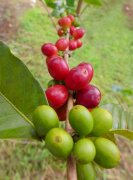
The first flowering period of the coffee tree is about three years old. the five-petal tube-shaped white flowers are filled with a faint scent of jasmine and the inflorescences are arranged in dense clusters. Flowers wither after two or three days of blooming and begin to bear fruit after a few months. The fruit is a drupe with a diameter of about 1.5 cm. It is green at first, then turns yellow gradually, turns red when ripe, and is very similar to cherries.

Geography and climate of coffee production process in Rwanda
The sink technician in the process will clean the coffee immediately because the delay will ferment the sugary outer layer of the coffee beans, ruining the taste of the coffee. The coffee beans are first thrown into a deep trough, and the best quality coffee fruit goes into the bottom and passes through a machine that peels off its skin. The mechanic takes out the floating coffee fruit, processes it in the same way and allows the cooperative to compare it in the domestic market.

Coffee tanning method
Sun-dried beans have a complete natural mellow flavor, gentle fragrance and more gum; washing laws have a good mellow taste, a high degree of fragrance and active sour taste.
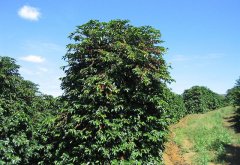
Roasting of Coffee and planting of Coffee trees
Coffee is a perennial evergreen shrub or small tree of Rubiaceae. It is a horticultural perennial cash crop with the characteristics of fast growth, high yield, high value and wide market. Wild coffee trees can grow to a height of 5 to 10 meters, but coffee trees planted on the manor are often cut to less than 2 meters in order to increase their fruit and facilitate harvesting. The first flowering period of a coffee tree is about the age of the tree.

How long does it take to produce coffee beans?
Remove the pulp from the outer layer of the coffee cherry and soak it in a large cement tank filled with water. After fermentation, the water-washed coffee will have a distinctive and clear flavor. The fermented coffee beans are washed with clean water, then removed from the water and dried in the sun or machine. Finally, remove the pulp peel and silver skin with a sheller, and you can enter.

The production process and methods of coffee in Rwanda introduce the characteristics of fine coffee
After the washed coffee beans are air-dried on the net rack, after washing the coffee beans many times to completely remove the remaining skin and sugary outer layer, the coffee beans are put into the sheltered rack to air-dry. Cooperative staff regularly flip coffee beans, while technicians continue to look for and pick out poor quality coffee beans. The two-week drying process takes place in the sun (preparing mulch in case of rain), but not

Rwanda Coffee Production Process Geography Climate
Maraba coffee is grown in southern Rwanda, about 12 km (7 mi) from Butare and 150 km (93 mi) from the capital, Gigali. The project began in the Malaba area of Butare province, but was succeeded by local government organizations in 2006, and the area is now part of the Huye region of Southern province. Due to its proximity to the Great Rift Valley and the Newway Forest Mountains, the terrain of this zone

Species of coffee beans plant classification of coffee
Classification of plants Coffee beans Coffee trees belong to the evergreen tree of Rubiaceae. Rubiaceae plants have been dominated by plants with special effects since ancient times, such as quinine tree, which is regarded as a specific drug for malaria, and Dugen, which is used to treat amoeba dysentery. Coffee is defined as the most unique alkaloid drinking flora. The fruit of coffee consists of outer skin, pulp, endocarp, silver skin, and the above-mentioned layers.

Introduction to the planting method of Coffee Tree where is the origin of coffee tree
The origin of the coffee tree is Ethiopia in Africa. In botany, coffee trees belong to the evergreen trees of the subgenus Rubiaceae, and coffee beans, commonly known as coffee beans, are the seeds of the fruit of coffee trees, just because they are shaped like beans, so they are called coffee beans. Climate is the decisive factor for coffee cultivation. Coffee trees are only suitable for growing in the tropics or subtropics, so latitude 25 is south and north.

Introduction to the characteristics of Rwandan Coffee beans in Rwanda Coffee Flavor Manor area
Malaba Coffee grows in southern Rwanda, about 12 kilometers (7 miles) from the city of Butare and 150 kilometers (93 miles) from the capital, Gejali. The plan began in the Malaba area of Butare province, but was taken over by a local government organization in 2006, which is now part of the Huye district of the southern province. Due to its proximity to the East African Rift Valley and the Neuenway Forest Mountains, the terrain
Coffee trees in Yangmingshan "Want to come up and see?"
Professional barista exchange, please pay attention to coffee workshop (Weixin Official Accounts cafe_style) One morning, Akai called to say that the coffee tree in the back mountain blossomed and met at Zhishan gas station at 2 p.m. I was a little excited along the way. I knew there were coffee trees on Yangming Mountain for a long time, but I couldn't get into them all the time. Kai said that there seemed to be three varieties, one was a big leaf species, and the other was

The origin and planting conditions of coffee trees basic knowledge of coffee
The origin of the coffee tree is Ethiopia in Africa. In botany, coffee trees belong to the evergreen trees of the subgenus Rubiaceae, and coffee beans, commonly known as coffee beans, are the seeds of the fruit of coffee trees, just because they are shaped like beans, so they are called coffee beans. Climate is the decisive factor for coffee cultivation. Coffee trees are only suitable for growing in the tropics or subtropics, so latitude 25 is south and north.

What conditions do coffee trees need for planting? what are the requirements for the natural environment?
The origin of the coffee tree is Ethiopia in Africa. In botany, coffee trees belong to the evergreen trees of the subgenus Rubiaceae, and coffee beans, commonly known as coffee beans, are the seeds of the fruit of coffee trees, just because they are shaped like beans, so they are called coffee beans. Climate is the decisive factor for coffee cultivation. Coffee trees are only suitable for growing in the tropics or subtropics, so latitude 25 is south and north.

What conditions do coffee trees need for planting? do they have high requirements on local climate?
The origin of the coffee tree is Ethiopia in Africa. In botany, coffee trees belong to the evergreen trees of the subgenus Rubiaceae, and coffee beans, commonly known as coffee beans, are the seeds of the fruit of coffee trees, just because they are shaped like beans, so they are called coffee beans. Climate is the decisive factor for coffee cultivation. Coffee trees are only suitable for growing in the tropics or subtropics, so latitude 25 is south and north.
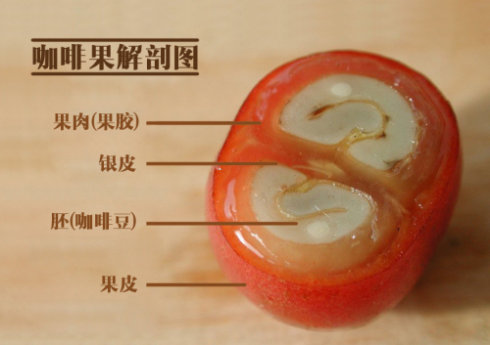
The beautiful red fruit of coffee knowledge the layered diagram of coffee fruit and the detailed introduction of the text.
Coffee shop lovers must have seen coffee beans (Coffee Bean), but coffee fruits may not have been seen. Of course, I haven't seen it either, but I have to see it, but if Yirgacheffe of Chongqing Brista Coffee West Point College can grow a job smoothly, then I won't have to run so far. Coffee tree cultivation is called coffee belt (Coff).